
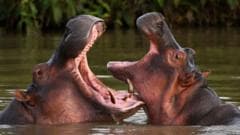
India’s Anant Ambani Offers to Relocate 80 “Cocaine Hippos” from Colombia
COLOMBIA – The Colombian government’s plan to cull 80 invasive hippopotamuses—descendants of the four animals introduced by drug‑lord Pablo Escobar in the 1980s—has drawn an unexpected offer from one of Asia’s wealthiest families. Anant Mukesh Ambani, the youngest son of Reliance Industries chairman Mukesh Ambani, has written to Colombia’s Minister of Environment and Sustainable Development, Irene Vélez Torres, proposing to transfer the animals to his wildlife‑conservation centre, Vantara, in Jamnagar, Gujarat, India.
The proposal, which surfaced in the media on 28 April 2026, outlines a fully funded, scientifically managed relocation that would respect Colombian sovereignty, comply with international wildlife‑transport regulations, and guarantee “lifetime care” for the hippos. It is the latest development in a controversy that began when President Gustavo Petro’s administration announced a lethal control program aimed at curbing the rapid growth of the feral hippo population in the Magdalena River basin.
Background: Escobar’s “Cocaine Hippos”
In the early 1980s, Escobar imported three female and one male hippopotamus to his private hacienda, Hacienda Nápoles, near Puerto Triunfo, Antioquia. After his death in 1993 the animals were left to roam freely. With no natural predators and abundant wetland habitats, the herd multiplied quickly; estimates in 2025 placed the total number at roughly 160 individuals, making it the largest hippo population outside Africa.
Colombian ecologists consider the species invasive. Hippos have altered riverbank vegetation, competed with native fauna such as the Amazonian manatee and river turtles, and posed safety risks to fishermen and nearby communities. In 2023 the government listed the hippo as an “exotic invasive species,” paving the way for control measures that culminated in the current culling proposal for 80 animals.
The Ambani Offer
In a formal letter dated 27 April 2026, Anant Ambani highlighted three pillars of his plan:
- Scientific and veterinary oversight: Vantara would deploy a team of veterinary specialists, wildlife biologists, and epidemiologists to oversee capture, quarantine, and transport.
- Logistical execution: The proposal includes air‑lift or sea‑transport options, bio‑security protocols, and a custom‑built enclosure at Vantara that mimics the hippos’ riverine environment.
- Long‑term commitment: Vantara pledges to provide lifelong care, including regular health monitoring, enrichment programs, and a breeding‑controlled population to prevent future overpopulation.
Ambani’s statement on social media emphasized the ethical dimension of the offer: “These 80 hippos did not choose where they were born, nor did they create the circumstances they now face. If we have the capacity to save them through a safe and humane solution, we have a responsibility to try.”
Colombian Government’s Position
Minister Vélez Torres confirmed that the letter has been received and that the ministry is reviewing all alternatives before proceeding with the cull. In a press conference on 13 April 2026, she explained that without decisive action the hippo population could reach 500 by 2030, causing irreversible damage to the Magdalena ecosystem and increasing human‑wildlife conflict.
The ministry has previously explored relocation options to neighboring countries such as Ecuador, Peru, and Chile, as well as distant destinations like the Philippines and South Africa. However, logistical complexities, quarantine requirements, and the need for suitable habitats have stalled those efforts.
Vantara’s Capacity and Controversy
Vantara, founded by Anant Ambani in 2022, brands itself as “one of the world’s largest wildlife rescue and conservation centres,” housing over 150 000 animals from more than 2 000 species across a 3 500‑acre campus. Its facilities include advanced veterinary hospitals, breeding programmes for endangered species, and a climate‑controlled “riverine zone” designed for large aquatic mammals.
While the centre’s capabilities are impressive, wildlife NGOs have raised questions. Critics point to the hot, arid climate of Gujarat, which can exceed 40 °C in summer, potentially stressing a species accustomed to subtropical river habitats. Others worry about the precedent of moving an invasive species to a non‑native region, even under expert care.
Vantara’s spokesperson, Vivaan Karani, responded that the habitat will be engineered to maintain water temperatures between 24 °C and 28 °C, with shade structures, misting systems, and a 150‑acre artificial lake that replicates the Magdalena’s flow patterns. He added that “bio‑security measures will ensure no disease transmission to local fauna, and the hippos will be kept under constant veterinary supervision.”
International and Legal Hurdles
Any translocation will require coordination between the Colombian Ministry of Environment, India’s Ministry of Environment, Forest and Climate Change, and the Convention on International Trade in Endangered Species of Wild Fauna and Flora (CITES). Both countries have signaled willingness to cooperate, but the process could take months.
Legal experts note that the hippos are listed under CITES Appendix II, meaning export permits are required but not prohibited. The main challenge lies in proving that the relocation will not lead to a new invasive problem in India—a requirement under the Convention on Biological Diversity.
Potential Implications
If the plan succeeds, it would mark one of the largest international wildlife relocations ever attempted and could set a new model for humane alternatives to lethal control of invasive species. It would also showcase the emerging role of private philanthropy—particularly from ultra‑wealthy families—in global conservation debates.
Conversely, a failed relocation could reinforce the Colombian government’s stance on culling and fuel criticism of private zoos that appear to use high‑profile animal rescues for branding rather than ecological benefit.
What Comes Next?
The Colombian Ministry has not set a definitive deadline for a decision, but officials indicated that the cull is slated for the second half of 2026 if alternatives are not approved. Anant Ambani has expressed readiness to engage in a “transparent, science‑led dialogue” with Colombian authorities and to cover all associated costs.
Stakeholders—including local Colombian communities, international conservation bodies, and Indian wildlife regulators—are now watching closely. The outcome will not only determine the fate of 80 hippos but also influence how the global community addresses the complex legacy of “exotic” animals introduced by historical figures like Escobar.