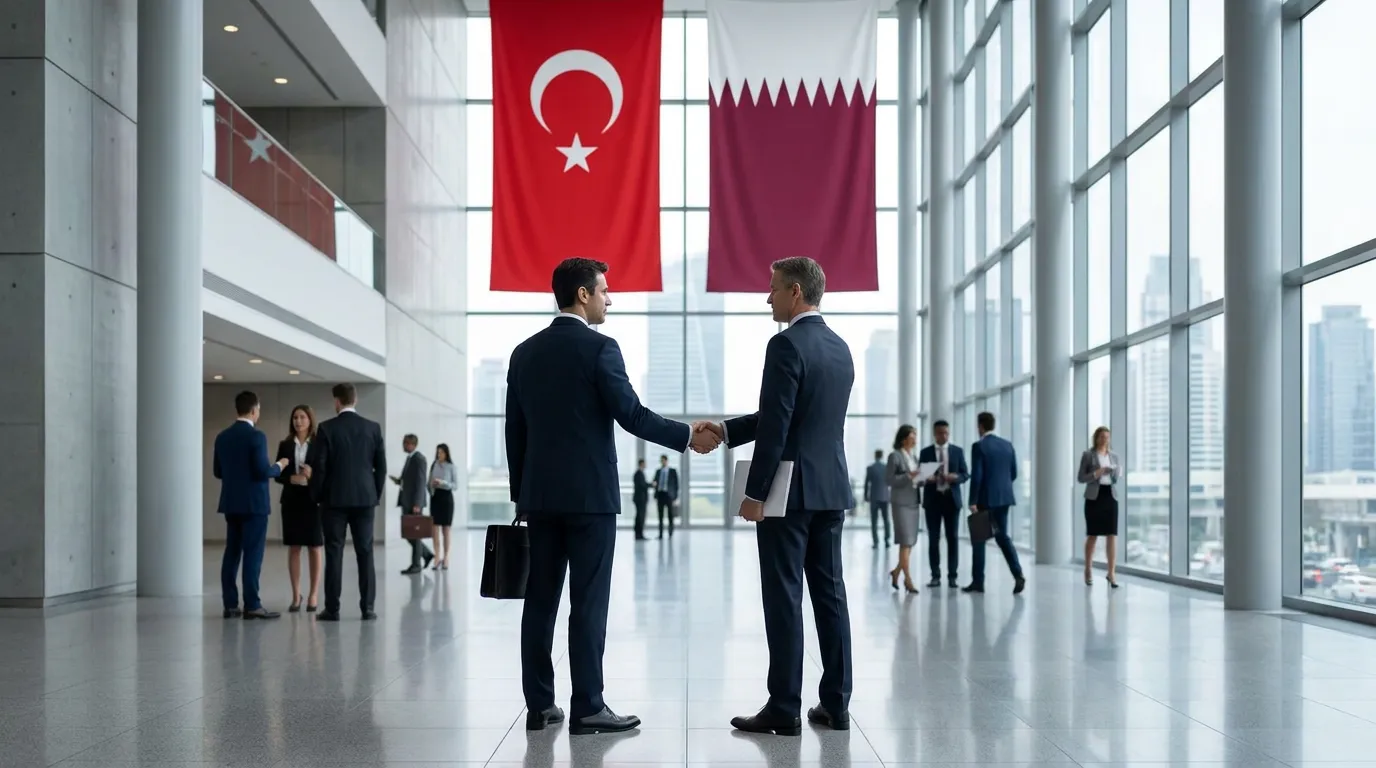
Turkish President Recep Tayyip Erdoğan will host Qatar's Emir Sheikh Tamim bin Hamad Al Thani in İstanbul on Friday to co-chair the 12th meeting of the Türkiye-Qatar High Strategic Committee. The two leaders are scheduled to sign a series of bilateral agreements and memoranda of understanding aimed at expanding cooperation in trade, the defense industry, artificial intelligence and technology.
Speaking to Türkiye's state-run Anadolu Agency ahead of the summit, Qatar's Ambassador to Ankara, Faisal bin Abdullah Al Hanzab, said the talks would give new momentum to relations that have already moved beyond standard diplomatic coordination.
"This meeting reflects the determination of the two countries to further advance their strategic partnership and create new opportunities for cooperation in institutional, economic, defense and technology fields. We aim to turn our shared understandings into concrete steps and projects," Al Hanzab said.
Trade target of $5 billion
Economic ties are expected to dominate the agenda as Ankara and Doha work to increase bilateral trade nearly fivefold. Trade volume between the two nations stood at $1.15 billion in 2025, while both governments have set a joint target of $5 billion.
To support that goal, a comprehensive trade and economic partnership agreement between Türkiye and Qatar entered into force on Aug. 1, 2025, reducing barriers to commerce and cross-border investment.
A decade of institutional partnership
Türkiye and Qatar established their formal strategic partnership in 2014 and have held annual High Strategic Committee summits since 2015, alternating between Turkish and Qatari cities. Across the previous 11 committee meetings, the two close allies have signed 115 agreements covering sectors ranging from energy and finance to military cooperation.
Beyond bilateral commerce, Friday's talks will address regional diplomacy and security. Ambassador Al Hanzab noted that amid wide international uncertainty, coordination between Ankara and Doha serves as a key pillar for easing regional tensions, supporting diplomatic mediation and promoting peaceful dispute resolution.