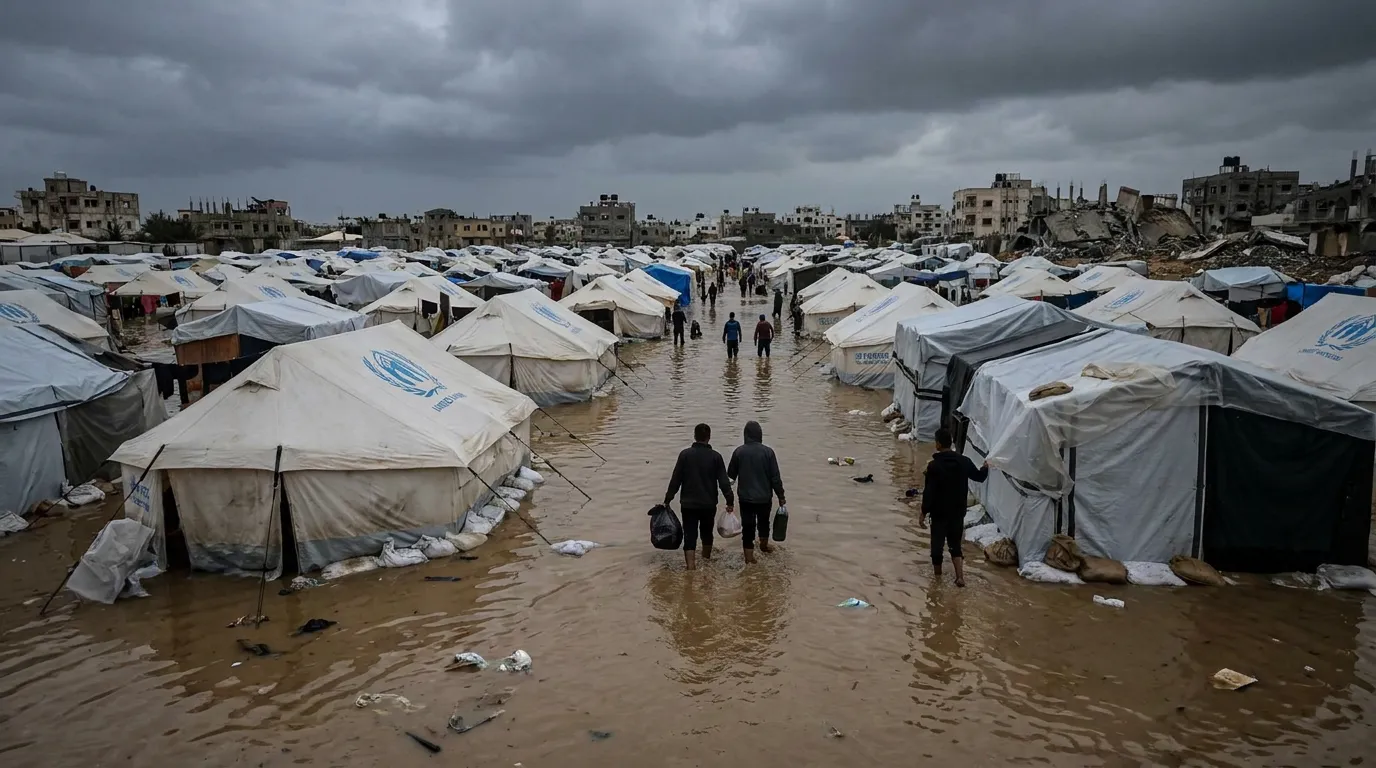
Torrential rains flood 70,000 displacement tents across Gaza
Torrential rains and strong winds swept across the Gaza Strip over the weekend, flooding at least 70,000 makeshift tents and leaving tens of thousands of displaced Palestinian families without shelter, local authorities said. The storm, which began late Friday and continued through Saturday, soaked mattresses, blankets and food supplies while triggering the collapse of war-damaged structures.
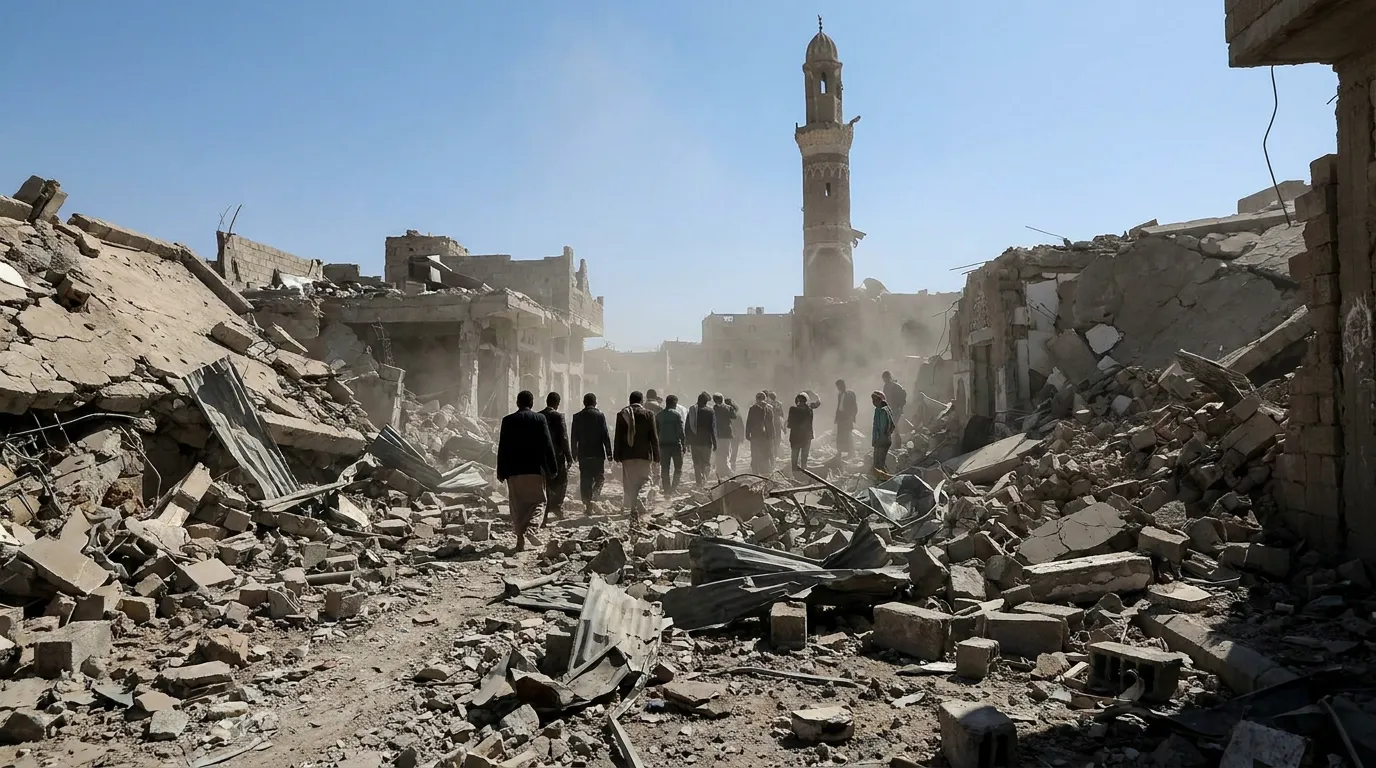
According to the Hamas-run government media office in Gaza, the flooding occurred within the first 12 hours of the storm and caused an estimated $3 million in initial direct losses. While no fatalities were reported, the media office stated that dozens of cracked walls and roofs collapsed across the enclave, causing several injuries, some of them critical. Medical sources told Türkiye's state-run Anadolu Agency that at least five Palestinians were injured when two walls of buildings damaged by previous Israeli strikes gave way and a sheet of corrugated metal fell during high winds. Gaza's civil defense service also reported that three abandoned houses collapsed completely without causing casualties.
Emergency crews overwhelmed by infrastructure damage
Gaza Municipality spokesman Hosni Muhanna said that Gaza City recorded 60 millimeters (2.36 inches) of rainfall in just 12 hours—equivalent to roughly 15% of its average annual precipitation. Muhanna noted that wartime destruction has reduced the capacity of the city's rainwater drainage system to 20%, leaving approximately 270 camps and shelter sites in low-lying neighborhoods vulnerable to flooding.
In camps across Gaza City, Nuseirat and Deir al-Balah, overflowing sewage mixed with the rising floodwaters due to crippled sanitation networks. Residents attempted to build makeshift sand barriers and drain water by hand to salvage their belongings.
"This is the first day of rain, and of course we are already flooded," Olfat Magdoub, a displaced resident in Gaza City, told Reuters as she tried to sweep water out of her shelter. "What will happen if it rains again the next day? This is only the first day and we're already overwhelmed."
Palestinian Civil Defense spokesman Mahmoud Bassal told the Agence France-Presse (AFP) news agency that emergency teams received more than 1,500 distress calls overnight from families trapped in inundated camps. Bassal said the agency is operating without essential equipment or fuel after hundreds of municipal vehicles, bulldozers and water pumps were destroyed during the war.
"We have issued an urgent distress call to the international community and humanitarian organizations to intervene immediately to save hundreds of thousands of displaced people from the flooding of their tents. We cannot face the consequences of this storm on our own."
Aid restrictions and growing shelter crisis
The storm struck as the vast majority of Gaza's population remains displaced following two years of war between Israel and the Palestinian group Hamas. Although a fragile ceasefire took effect in October 2025, Israeli forces still control roughly two-thirds of the territory, and approximately 1 million people are crowded into just 30% of Gaza City's area, according to municipal officials.
The United Nations Relief and Works Agency for Palestine Refugees (UNRWA) reported on Thursday that 1.98 million people—about 94% of Gaza's population—require shelter and essential winter supplies, with 58% facing critical or catastrophic shelter needs. The UN Office for the Coordination of Humanitarian Affairs (OCHA) previously warned in October that 950,000 displaced Palestinians were living in areas at medium to high risk of winter flooding.
Local officials and a coalition of Palestinian civil society organizations warned on Sunday that the combination of freezing temperatures, destroyed shelters and sewage-contaminated floodwaters threatens to trigger outbreaks of waterborne diseases. Gaza authorities and rights groups accused Israel of blocking the entry of mobile homes, tarpaulins, replacement tents and heavy machinery needed to clear drains and rebuild. COGAT, the Israeli defense ministry body responsible for coordinating humanitarian aid into the Palestinian territories, did not immediately respond to the accusations.