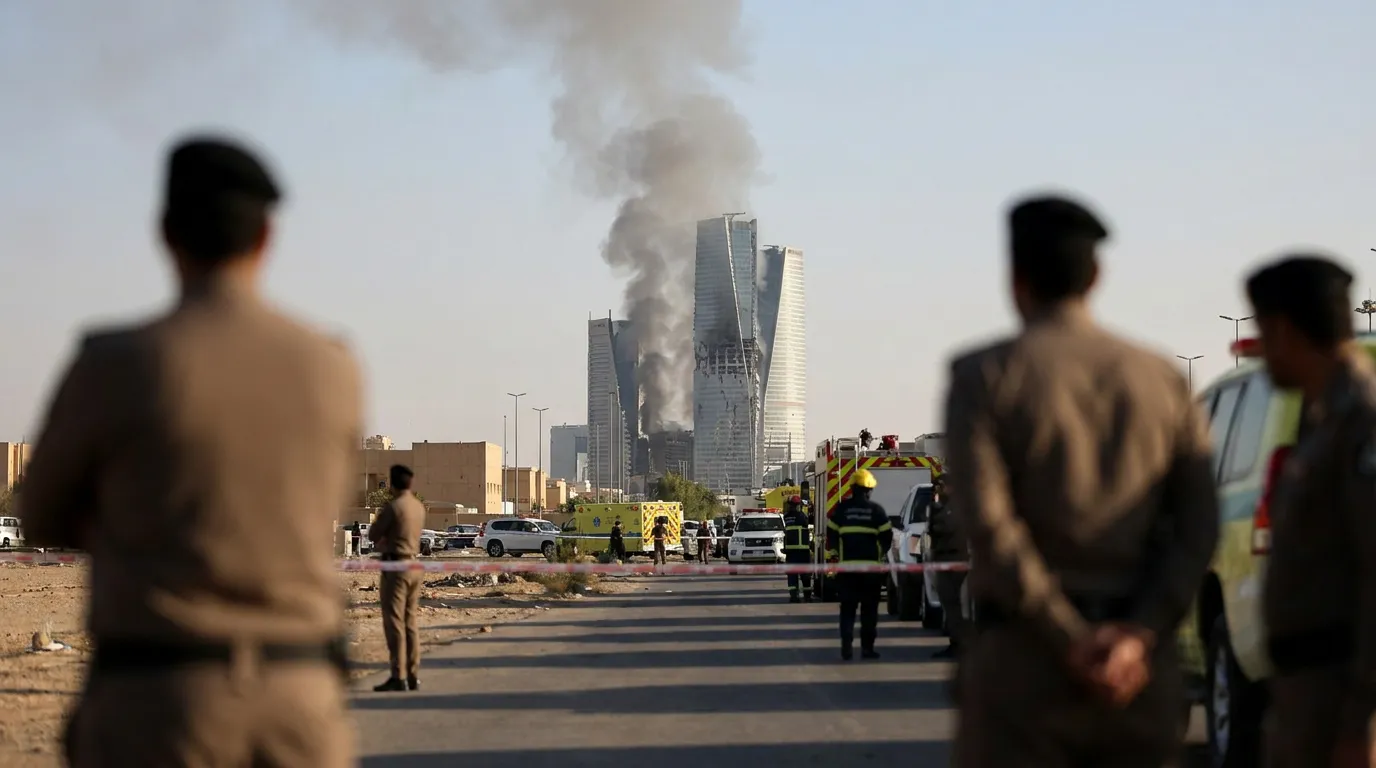
An administrative skyscraper belonging to state oil giant Saudi Aramco in Riyadh sustained damage on Sunday after Saudi air defenses intercepted multiple missiles launched from Yemen by the Iran-aligned Houthi movement.
Saudi Arabia’s Energy Ministry stated that falling shrapnel from an "attempted attack" caused minor damage to the building and resulted in no injuries or fatalities. The building, known as the Aramco Tower, is one of the tallest structures in the capital's King Abdullah Financial District (KAFD), a major business hub that also houses the headquarters of the kingdom's Public Investment Fund, the Saudi stock exchange and international banks.
Witnesses in Riyadh reported hearing several loud explosions shortly after Saudi Civil Defense issued an early-warning alert regarding an incoming threat. A Reuters witness observed blown-out windows across several floors of the tower's glass facade, while multiple witnesses told AFP that the financial district had been targeted.
"Aramco tower in KAFD has been targeted, that's the sure thing," one witness told AFP. Although one witness told CNN that ambulances were seen heading toward the site, Saudi authorities maintained that there were no casualties and later announced that the threat had passed.
Air defense interceptions across the kingdom
Brig. Gen. Turki al-Maliki, spokesperson for the Saudi-led military coalition fighting in Yemen, said in a statement that coalition air defenses intercepted and destroyed two ballistic missiles fired by the Houthis toward Riyadh. The coalition subsequently reported destroying two cruise missiles over the capital and the kingdom's southern region, in addition to intercepting another ballistic missile aimed at the oil-rich Eastern Province.
Earlier on Sunday, Saudi Civil Defense briefly issued and lifted security warnings across parts of the Eastern Province, including Dhahran, where Saudi Aramco is headquartered. Neither Saudi Aramco nor Houthi officials immediately issued a formal statement regarding the damage to the Riyadh tower.
Collapse of the Yemen truce and regional escalation
Sunday's strikes occurred just hours after Saudi authorities announced that schools in Riyadh would return to in-person classes following weeks of remote instruction prompted by earlier cross-border attacks.
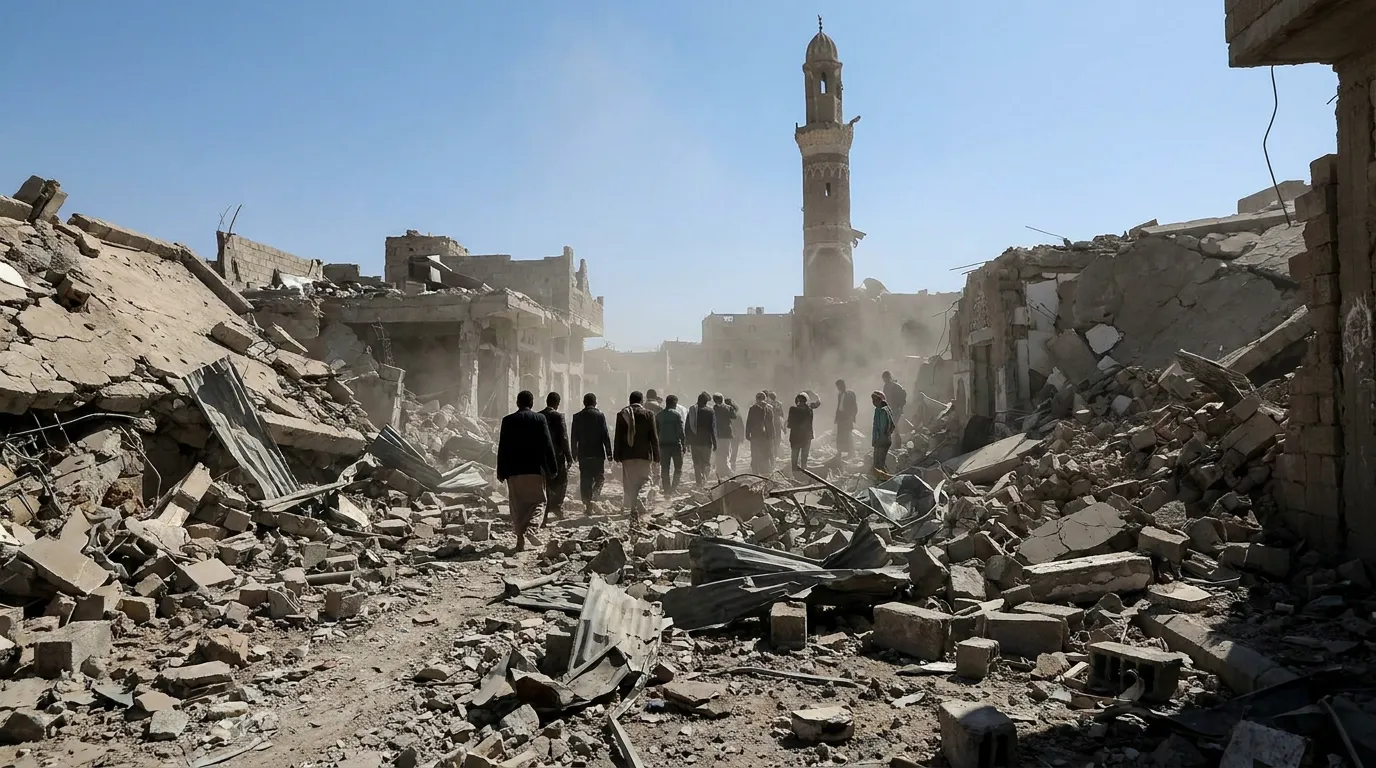
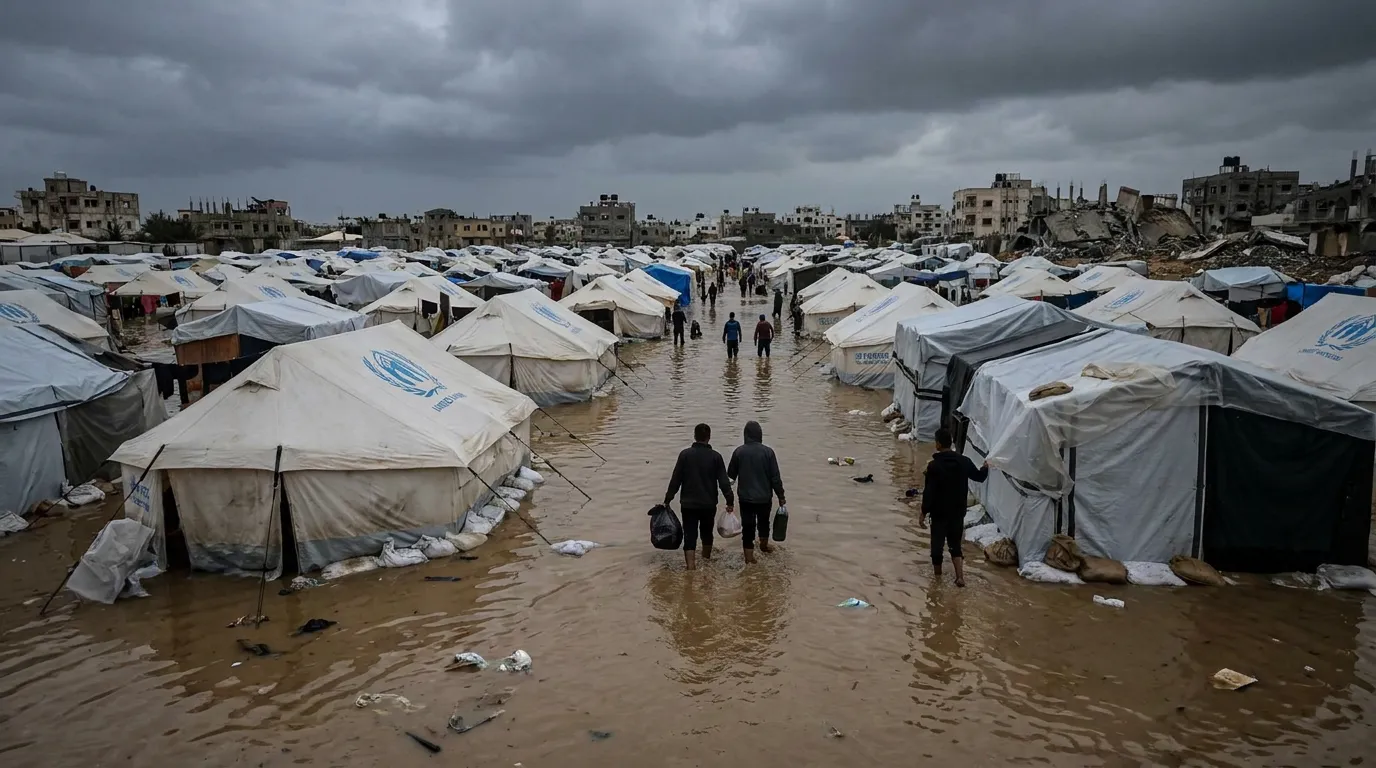
Hostilities between the Saudi-led coalition and the Houthis—formally known as Ansar Allah—resumed in July, shattering a 2022 United Nations-brokered truce that had largely frozen cross-border attacks for four years. The renewed conflict in Yemen has opened an active front in the wider Middle East war that escalated after U.S. and Israeli strikes on Iran in February.
Since July, Houthi forces have increased missile and drone strikes against Saudi airports, ports and energy infrastructure, while Saudi warplanes have conducted regular airstrikes against Houthi-controlled territories in Yemen. In October, a strike caused extensive damage to Aramco’s main headquarters in Dhahran, and a separate attack on Riyadh’s King Khalid International Airport on October 10 killed 13 people and wounded more than 300, according to Saudi figures.
Prior to Sunday's interceptions over Riyadh, Houthi military spokesperson Yahya Saree claimed the group had carried out six military operations targeting Aramco facilities, Riyadh's airport and Saudi military positions along the border. Saree also alleged that the Saudi-led coalition had conducted 105 airstrikes and missile attacks across Sanaa and seven other Yemeni governorates over the preceding 24 hours, bringing the total number of coalition strikes since the current escalation began to 4,369. The Saudi-led coalition did not immediately comment on the Houthi claims.